
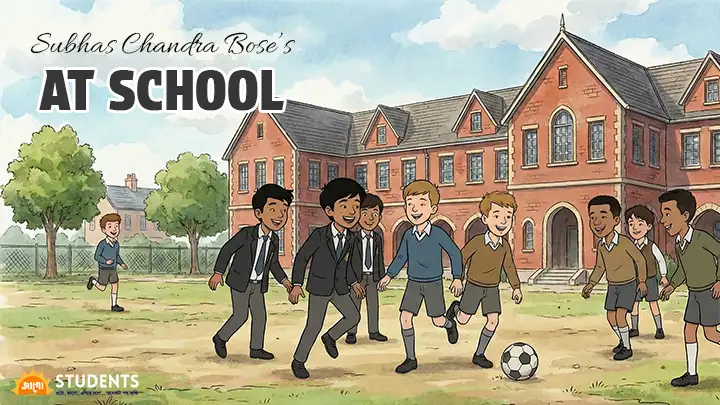
এই পোস্টে প্রকাশ করা হয়েছে WBCHSE বোর্ডের Class 11 এর Semester 2 এর At School Bengali Meaning। এটি লিখেছেন সুভাষচন্দ্র বোস। পোস্টটিতে প্যারাওয়াইস প্রত্যেকটি লাইনের বাংলা অনুবাদ দেওয়া হয়েছে যাতে ছাত্রছাত্রীদের টেক্সটি পড়ে বুঝতে কোনো অসুবিধা না হয়। আশা রাখছি ছাত্রছাত্রীদের ভালো লাগবে।
About Writer | লেখক পরিচিতি
- Subhas Chandra Bose জন্মগ্রহণ করেছিলেন ২৩শে জানুয়ারি ১৮৯৭ সালে ভারতের ওড়িশার কটকে।
- তাঁর পিতা হলেন জানকীনাথ বসু এবং মাতা হলেন প্রভাবতী দেবী।
- তিনি ১৯২০ সালে Indian Civil Service (ICS) পরীক্ষায় পাশ করেন, কিন্তু ভারতীয় স্বাধীনতা আন্দোলনে যোগ দিতে তিনি পদত্যাগ করেন।
- ১৯৩৯ সালে তিনি ফরওয়ার্ড ব্লক গঠন করেন ভারতের স্বাধীনতার জন্য লড়াই করা বিপ্লবীদের একত্রিত করতে।
- তিনি ১৯৩৮ ও ১৯৩৯ সালে Indian National Congress (INC) এর সভাপতি নির্বাচিত হয়েছিলেন।
- জাপানের সহায়তায় তিনি আজাদ হিন্দ ফৌজ গঠন করেন।
- তাঁর বিখ্যাত উক্তি ছিল – “তোমরা আমাকে রক্ত দাও, আমি তোমাদের স্বাধীনতা দেব।”
- অনুমান করা হয় তিনি ১৮ই আগস্ট ১৯৪৫ সালে তাইওয়ানে এক বিমান দুঘর্টনায় শেষ নিঃশ্বাস ত্যাগ করেন। তবে এই তথ্য নিয়ে অনেক বিতর্ক রয়েছে।
- ২৩শে জানুয়ারি তাঁর জন্মদিন ভারতে ‘পরাক্রম দিবস’ হিসাবে পালিত হয়।
- নীচের টেক্সটি সুভাষচন্দ্র বসুর আত্মজীবনীমূলক গ্রন্থ ‘An Indian Pilgrim’ থেকে নেওয়া হয়েছে।
At School Bengali Meaning | বাংলা অনুবাদ
I was nearing my fifth birthday (January, 1902) when I was told I would be sent to school.
যখন আমার বয়স পঞ্চম জন্মদিনের খুব কাছাকাছি (জানুয়ারি, ১৯০২) তখন আমাকে বলা হল যে আমাকে স্কুলে পাঠানো হবে।
I do not know how other children have felt in similar circumstances (সারকামস্টেনসেস – পরিস্থিতি), but I was delighted (ডিলাইটেড – আনন্দিত).
আমি জানি না অন্য শিশুরা একই পরিস্থিতিতে কেমন অনুভব করে, কিন্তু আমি আনন্দিত হয়েছিলাম।
To sec your elder brothers and sisters dress and go to school day after day and be left behind at home simply because you are not big enough-not old enough—is a galling (গলিং – পীড়াদায়ক) experience.
বড়ো ভাই-বোনেদের প্রতিদিন প্রস্তুত হতে এবং স্কুলে যেতে দেখা আর নিজে বাড়িতে পড়ে থাকা কারণ যথেষ্ট বড়ো হয়নি বা বয়স হয়নি বলে – এটা অত্যন্ত যন্ত্রণাদায়ক অভিজ্ঞতা।
At least, so I had felt, and that is why I was overjoyed (অভারজয়েড – আনন্দিত হওয়া).
অন্তত, আমি সেইরকমই অনুভব করেছিলাম, এবং সেই কারণেই আমি এত আনন্দিত হয়েছিলাম।
It was to be a red-letter day for me.
এটা আমার কাছে ছিল একটা বিশেষ দিন।
At long last I was going to join the grown-up respectable folks who did not stay at home except on holidays.
অবশেষে আমি যোগ দিতে যাচ্ছিলাম সেই প্রাপ্তবয়স্ক সম্মানীয় লোকেদের দলে যারা ছুটির দিন ছাড়া বাড়িতে থাকত না।
We had to start at about 10 a.m. because the classes commenced exactly at 10 a.m.
আমাদের সকাল ১০টায় রওনা দিতে হত কারণ ক্লাস ঠিক ১০টার সময়ই শুরু হতো।
Two uncles of about the same age as myself were also to be admitted along with myself.
সমবয়সী দুজন কাকাও আমার সাথে ভর্তি হয়েছিলেন।
When we were all ready, we began to run towards the carriage which was to take us to school.
যখন আমরা সকলে প্রস্তুত হলাম, তখন আমরা সেই গাড়ির দিকে দৌড়তে শুরু করলাম যেটা আমাদের স্কুলে নিয়ে যেত।
Just then, as ill-luck would have it, I slipped and fell.
ঠিক তখনই, দুর্ভাগ্যবশত, আমার পা পিছলে গেল এবং পড়ে গেলাম।
I was hurt and, with a bandage round my head, I was ordered to bed.
আমার আঘাত লেগেছিল এবং, আমার মাথায় ব্যান্ডেজ বাঁধা অবস্থায়, আমাকে বিছানায় শুয়ে থাকার নির্দেশ দেওয়া হল।
The rumbling of the carriage wheels grew fainter in the distance.
গাড়ির চাকার ঘড়ঘড় শব্দ ক্রমশ দূরে মিলিয়ে যেতে লাগল।
The lucky ones had gone, but there I lay with darkness staring me in the face and my fond hopes dashed to the ground.
ভাগ্যবানেরা চলে গেল, কিন্তু আমি সেখানে শুয়ে রইলাম, অন্ধকার আমার মুখের দিকে চেয়ে রইল এবং আমার সব আশা মাটিতে মিশে গেল।
Twenty-four hours later I found solace.
চব্বিশ ঘন্টা পরে আমি সান্ত্বনা পেয়েছিলাম।
Ours was a missionary school meant primarily for European and Anglo-Indian boys and girls with a limited number of seats (about 15 per cent) for Indians.
আমাদের স্কুলটা ছিল একটা মিশনারি স্কুল যা ইউরোপীয় এবং অ্যাংলো-ইন্ডিয়ান ছেলে ও মেয়েদের জন্য নির্ধারিত ছিল, যেখানে ভারতীয়দের জন্য সীমিত সংখ্যক আসন (প্রায় ১৫ শতাংশ) ছিল।
All our brothers and sisters had joined this school, and so I did.
আমাদের সমস্ত ভাই-বোনেরাই এই স্কুলে যোগদান করেছিল, আর তাই আমিও করেছিলাম।
I do not know why our parents had selected this school, but I presume it was because we would master the English language better and sooner there than elsewhere, and knowledge of English had a premium in those days.
আমি জানি না কেন আমাদের বাবা-মা এই স্কুলটাকেই বেছে নিয়েছিলেন, কিন্তু আমি অনুমান করি এটার কারণ ছিল যে আমরা সেখানে ইংরেজি ভাষাটাকে ভালোভাবে এবং দ্রুত আয়ত্ত করতে পারব অন্য যে কোনও জায়গার থেকে, এবং সেই দিনগুলিতে ইংরেজি ভাষার জ্ঞান ছিল অত্যন্ত মূল্যবান।
I still remember that when I went to school I had just learnt the English alphabet and no more.
আমি এখনও মনে করতে পারি যে যখন আমি স্কুলে যেতাম তখন আমি শুধুমাত্র ইংরেজি বর্ণমালা শিখেছিলাম, তার বেশি কিছু নয়।
How I managed to get along without being able to speak a word of English beats me now.
কীভাবে ইংরেজিতে একটা শব্দ না বলতে পেরেও আমি নিজেকে মানিয়ে নিয়েছিলাম তা আজও ভাবলে অবাক লাগে।
I have not yet forgotten one of my first attempts at English.
আমি এখনও ভুলিনি ইংরেজিতে কথা বলার আমার প্রথম প্রচেষ্টাগুলির মধ্যে একটি প্রচেষ্টা।
We had been given slate pencils and told to sharpen them before trying to write.
আমাদেরকে দেওয়া হত স্লেট-পেনসিল এবং সেগুলিকে ধারালো করতে বলা হত লেখার চেষ্টা করার আগে।
Mine was done better than that of my uncle; so I pointed that out to our teacher by saying, “Ranendra mot I shor”- and thought that I had talked in English.
আমার কাকার থেকে আমার কাজ বেশ ভালো হয়েছিল; তাই আমি তা দেখিয়ে আমাদের শিক্ষককে বলেছিলাম, “রণেন্দ্র মোট আই শোর” – এবং ভেবেছিলাম যে আমি ইংরেজিতে কথা বলছি।
Our teachers were Anglo-Indians (and mostly ladies) with the exception of the headmaster and headmistress, Mr and Mrs Young, who had come out from England.
আমাদের শিক্ষকরা ছিলেন অ্যাংলো-ইন্ডিয়ানস (এবং বেশিরভাগই মহিলা) শুধুমাত্র প্রধান শিক্ষক এবং প্রধান শিক্ষিকা ছাড়া, মিস্টার এবং মিসেস ইয়ং, যারা ইংল্যান্ড থেকে এসেছিলেন।
Most of our teachers we did not fancy.
আমাদের বেশিরভাগ শিক্ষককে আমরা পছন্দ করতাম না।
Some like Mr Young we feared, though we respected, for he was too liberal with his cane.
মিস্টার ইয়ং-এর মতো কিছু শিক্ষককে আমরা ভয় পেতাম, যদিও আমরা সম্মান করতাম, কারণ তিনি বেতের ব্যবহারে খুবই উদার ছিলেন।
Some like Miss Cadogan we tolerated.
মিসেস ক্যাডোগানের মতো কিছু শিক্ষিকাকে আমরা সহ্য করতাম।
Others like Miss S. we positively hated and would cry ‘Hurrah’ if she ever absented herself.
মিসেস এস.-এর মতো কিছু শিক্ষিকাকে আমরা স্পষ্টতই ঘৃণা করতাম এবং আমরা ‘হুররে’ বলে চেঁচিয়ে উঠতাম যদি তিনি অনুপস্থিত থাকতেন।
Mrs Young we liked, but Miss Sarah Lawrence who was our first teacher in the Infant Class we loved.
মিসেস ইয়াংকে আমরা পছন্দ করতাম, কিন্তু মিস সারাহ লরেন্স যিনি শিশু শ্রেনিতে আমাদের প্রথম শিক্ষিকা ছিলেন তাঁকে আমরা ভালোবাসতাম।
She had such a sympathetic understanding of the child’s mind that we were irresistibly drawn towards her.
শিশু মনের প্রতি তাঁর একটা এমনই সহানুভূতিশীল বোঝাপোড়া ছিল যে আমরা তাঁর প্রতি ভীষণভাবে আকৃষ্ট হতাম।
But for her, I doubt if I would have got on so easily at a time when I was unable to express myself in English.
যদি তিনি না থাকতেন, আমার সন্দেহ হয় হয়তো আমি এত সহজে মানিয়ে নিতে পারতাম না যখন আমি নিজেকে ইংরেজিতে প্রকাশ করতে অক্ষম ছিলাম।
Though the majority of the teachers and pupils were Anglo-Indians, the school was based on the English model and run on English lines, as far as Indian conditions would permit.
যদিও বেশিরভাগ শিক্ষক-শিক্ষিকা এবং ছাত্রছাত্রীরা অ্যাংলো-ইন্ডিয়ান ছিল, তবুও স্কুলটি ইংরেজ মডেলের ভিত্তিতে তৈরি ছিল এবং ইংরেজি পদ্ধতিতেই পরিচালিত হতো, যতদূর পর্যন্ত ভারতীয় পরিস্থিতি অনুমতি দিত।
There were certain things we did learn there which we would have missed in an Indian school.
সেখানে কিছু নির্দিষ্ট জিনিস ছিল যা আমরা সেখানে শিখেছিলাম যেগুলো আমরা ভারতীয় স্কুলে শেখা যেত না।
There was not that unhealthy emphasis on studies which obtains in Indian schools.
সেখানে অস্বাস্থ্যকরভাবে পড়াশোনার ওপর জোর দেওয়া হতো না যেগুলো ভারতীয় স্কুলগুলিতে দেখা যেত।
Outside studies, more attention was given to deportment, neatness, and punctuality than is done in an Indian school.
পড়াশোনার বাইরে, একটা ভারতীয় স্কুলের থেকে বেশি জোর দেওয়া হতো চালচলন, পরিচ্ছনতা, এবং সময়নিষ্ঠার ওপর।
In the matter of studies, the students received more individual attention at the hands of their teachers and the daily work was done more regularly and systematically than is possible in an Indian school.
পড়াশোনার ব্যাপারে, ছাত্রছাত্রীরা তাদের শিক্ষক-শিক্ষিকার কাছ থেকে বেশি ব্যক্তিগত মনোযোগ পেত এবং একটা ভারতীয় স্কুলের থেকে দৈনন্দিন কাজ আরও নিয়মিত এবং পদ্ধতিগতভাবে সম্পন্ন করা হতো।
The result was that practically no preparation was needed when an examination had to be faced.
এর ফলে যখন কোনো পরীক্ষার মুখোমুখি হতে হতো তখন প্রায় কোনো প্রস্তুতির প্রয়োজনই হতো না।
Moreover, the standard of English taught was much higher than that of Indian schools.
তাছাড়াও, ইংরেজি শেখানোর মান ভারতীয় স্কুলগুলির থেকে অনেক বেশি ছিল।
But after giving due consideration and credit to all this, I doubt if I should today advise an Indian boy to go to such a school.
কিন্তু সমস্ত কিছুর বিবেচনা ও কৃতিত্ব দেওয়ার পরেও, আমার সন্দেহ হয় যে আজকের দিনে একজন ভারতীয় ছেলেকে ওইরকম একটা স্কুলে যাওয়ার পরামর্শ দেওয়া আমার উচিত কিনা।
Though there was order and system in the education that was imparted, the education itself was hardly adapted to the needs of Indian students.
যদিও যে শিক্ষা দেওয়া হত তাতে শৃঙ্খলা ও নিয়ম ছিল, তবুও সেই শিক্ষা ভারতীয় ছাত্রছাত্রীদের জন্য খুব একটা উপযোগী ছিল না।
Too much importance was attached to the teaching of the Bible, and the method of teaching it was as unscientific as it was uninteresting.
বাইবেল শিক্ষার উপর অতিরিক্ত গুরুত্ব দেওয়া হতো, এবং শিক্ষার পদ্ধতিটি ছিল যেমন অবৈজ্ঞানিক তেমনই রসহীন / নীরস।
We had to learn our Bible lessons by heart whether we understood anything or not, as if we were so many priests memorizing the sacred texts.
আমরা বুঝতে পারি বা না পারি আমাদের বাইবেলের পাঠগুলো মুখস্থ করতে হতো, যেন আমরা অনেকগুলো পুরোহিত যারা পবিত্র গ্রন্থ মুখস্থ করছি।
It would be no exaggeration for me to say that though we were taught the Bible day in, day out, for seven long years, I came to like the Bible for the first time several years later when I was in College.
আমার জন্য এটা বলতে কোনো বাড়াবাড়ি হবে না যে যদিও আমাদের বাইবেল শেখানো হতো দিন, রাত ধরে, পুরো সাত বছরের জন্য, তবুও কয়েক বছর পরে আমি প্রথমবারের জন্য বাইবেল পছন্দ করতে শুরু করেছিলাম যখন আমি কলেজে পড়তাম।
There is no doubt that the curriculum was so framed as to make us as English in our mental make-up as possible.
কোনো সন্দেহ নেই যে পাঠ্যক্রমটি এমনভাবে তৈরি করা হয়েছিল যাতে আমাদের ব্যক্তিত্বকে যতটা সম্ভব ইংরেজদের মতো করে গড়ে তোলা যায়।
We learnt much about the geography and history of Great Britain but proportionally little about India – and when we had to negotiate Indian names, we did so as if we were foreigners.
গ্রেট ব্রিটেনের ভূগোল ও ইতিহাস সম্পর্কে আমাদের অনেক কিছু শিখতে হয়েছিল কিন্তু সেই তুলনায় ভারত সম্পর্কে অনেক কম শিখেছিলাম – এবং যখন আমাদের ভারতীয় নামগুলো উচ্চারণ করতে হতো, তখন আমরা এমনভাবে উচ্চারণ করতাম যেন আমরা বিদেশি।
We started our Latin declensions – ‘bonus, bona, bonum’ – rather early and did not have to be bothered about our Sanskrit declensions – ‘Gajah, Gajow, Gajah’ – till we had left the P. E. School.
আমরা শিখতে শুরু করে দিয়েছিলাম আমাদের ল্যাটিন শব্দরূপ – ‘বোনাস, বোনা, বোনাম’ – অনেক আগেই এবং আমাদের মাথা ঘামাতে হয়নি আমাদের সংস্কৃত শব্দরূপ – ‘গজঃ, গজৌ, গজাঃ’ – নিয়ে পি.ই স্কুল ছেড়ে আমাদের না যাওয়া পর্যন্ত।
When it came to music, we had to train our ears to ‘Do, Ray, Me, Fah’ and not to ‘Sah, Ray, Gah, Mah’.
যখন সঙ্গীতের কথা এল, তখন আমাদের কানকে ‘ডো, রে, মি, ফা’ তে অভ্যস্ত করতে হয়েছিল, কিন্তু ‘সা, রে, গা, মা’ তে নয়।
The readers contained stories and anecdotes from English history or fairy tales which are current in Europe and there was not a word in them of Indian origin.
পাঠ্যপুস্তকগুলোতে ইংরেজি ইতিহাস অথবা ইউরোপের প্রচলিত রূপকথার গল্প ও কাহিনী থাকত এবং সেখানে ভারতীয় কোনো কিছুর উল্লেখ থাকত না।
Needless to add, no Indian language was taught and so we neglected our mother-tongue altogether until we joined an Indian School.
বলার অপেক্ষা রাখে না, কোনো ভারতীয় ভাষা পড়ানো হত না আর তাই আমরা আমাদের মাতৃভাষাকে অবহেলা করতে শুরু করেছিলাম যতক্ষন না আমরা একটা ভারতীয় স্কুলে যোগ দিয়েছিলাম।
It would be wrong to conclude from the above that we were not happy at school. On the contrary.
উপরের কথাগুলো থেকে এই সিদ্ধান্তে আসা ভুল হবে যে আমরা স্কুলে খুশি ছিলাম না। বরং ঠিক তার উল্টোটা।
During the first few years we were not conscious at all that the education imparted was not suited to Indian conditions.
প্রথম কয়েক বছরে আমরা একেবারেই বুঝতে পারিনি যে, যে শিক্ষা আমাদের দেওয়া হচ্ছিল তা ভারতীয় পরিস্থিতির জন্য উপযুক্ত ছিল না।
We eagerly learnt whatever came our way and fell completely in line with the school-system, as the other pupils did.
আমরা আগ্রহের সাথে শিখতাম যা আমাদের সামনে আসত এবং সম্পূর্ণভাবে স্কুলের নিয়মে মানিয়ে নিতাম, যেমনটা অন্য ছাত্রেরা করত।
The school had a reputation for turning out well-behaved boys and girls, and we tried to live up to it.
স্কুলটির একটা সুনাম ছিল সুশীল ছেলে এবং মেয়ে তৈরির জন্য, এবং আমরা সেটি বজায় রাখার চেষ্টা করতাম।
Our parents, I think, were on the whole satisfied with our progress.
আমাদের বাবা-মায়েরা, আমার মনে হয়, আমাদের অগ্রগতিতে পুরোপুরি সন্তুষ্ট ছিলেন।
With the school authorities our stock was high, because the members of our family were generally at the top in whichever class they happened to be.
আমাদের স্কুল কর্তৃপক্ষের কাছে আমাদের কদর ছিল অনেক বেশি, কারণ আমাদের পরিবারের সদস্যরা যে শ্রেনিতেই থাকত সেখানেই তারা সাধারণত শ্রেষ্ঠত্ব অর্জন করত।
Sports naturally came in for some amount of attention, but not as much as one would expect in a school run on English lines.
খেলাধুলার প্রতিও কিছুটা মনোযোগ দেওয়া হতো, কিন্তু ঠিক ততটা নয় যতটা একজন ইংরেজি ধাঁচের স্কুল থেকে আশা করে।
That was probably due to the fact that our headmaster was not much of a sportsman himself.
এটার সম্ভবত এই কারণ ছিল যে আমাদের প্রধান শিক্ষক মহাশষ খুব একটা ক্রীড়াপ্রেমী ছিলেন না।
He was a unique personality in many ways and strong-willed – and the stamp of his character was visible everywhere within the precincts of the school.
বিভিন্ন দিক থেকে তিনি ছিলেন একজন অদ্বিতীয় ব্যক্তিত্ব এবং দৃঢ় মনোবল সম্পন্ন – এবং তাঁর চরিত্রের ছাপ স্কুলের সীমানার মধ্যে সর্বত্র স্পষ্ট ছিল।
He was a stern disciplinarian and a great stickler for good behaviour.
তিনি ছিলেন একজন কঠোর শৃঙ্খলাপরায়ন ব্যক্তি এবং ভালো আচরনের জন্য ছিলেন অত্যন্ত কড়াকড়ি।
In the Progress Report marks were given not only for the different subjects but also for (1) Conduct, (2) Deportment, (3) Neatness, (4) Punctuality.
প্রগতিপত্রে শুধুমাত্র বিভিন্ন বিষয়ের উপর নম্বর দেওয়া হতো না বরং (১) আচরণ, (২) চাল-চলন, (৩) পরিচ্ছন্নতা, (৪) সময়ানুবর্তিতার উপরও নম্বর দেওয়া হতো।
No wonder therefore that the boys and girls turned out were well-mannered.
তাই আশ্চর্য হওয়ার কিছুই ছিল না যে স্কুল থেকে যে ছেলে-মেয়েরা বের হতো তারা ছিল সুশীল।
For misbehaviour or indiscipline, boys were liable to be flogged with a cane, but only two of the teachers had this authority – the headmaster and his worthy spouse.
খারাপ ব্যবহার বা শৃঙ্খলাভঙ্গের জন্য, ছেলেদের বেতের লাঠি দিয়ে মারা হতো, কিন্তু শুধুমাত্র দুজন শিক্ষকেরই এই অধিকার ছিল – প্রধান শিক্ষক মহাশয় এবং তাঁর যোগ্য স্ত্রী।
Mr Young had several idiosyncrasies, however, and many were the jokes we would have at his expense.
মিস্টার ইয়ং-এর কিছু অদ্ভুত স্বভাব ছিল, যাইহোক, এবং আমরা মজা করে তাকে অনেক ঠাট্টা-তামাশা করতাম।
He had an elder brother, a bachelor and a missionary with a venerable beard, who was exceedingly fond of children and would love to play with them.
তাঁর একজন বড়ো ভাই ছিল, অবিবাহিত এবং শ্রদ্ধেয় দাড়িওয়ালা একজন মিশনারি, যিনি বাচ্চাদের ভীষণ পছন্দ করতেন এবং তাদের সাথে খেলতে ভালোবাসতেন।
To distinguish our headmaster from his elder brother, we nicknamed him “Young Young”, the latter being called “Old Young”.
আমাদের প্রধান শিক্ষককে তাঁর বড়ো ভাইয়ের থেকে আলাদা করার জন্য, আমরা তাঁর “ইয়ং ইয়ং” নাম দিয়েছিলাম, আর পরের জন্যকে ডাকা হত “ওল্ড ইয়ং” বলে।
Mr. Young Young was very sensitive to cold and even on a warm day he would shut the windows lest the draught should come in.
মিস্টার ইয়ং ইয়ং ঠান্ডার প্রতি খুবই সংবেদনশীল ছিলেন এবং এমনকি একটা গরমের দিনেও তিনি জানালাগুলি বন্ধ করে দিতেন যাতে ঠান্ডা হাওয়ার দমক ভেতরে না আসতে পারে।
He would frequently warn us about the risk of catching cold and getting cholera therefrom.
তিনি বরাবরই আমাদের ঠান্ডা লাগা এবং তার ফরে কলেরা হওয়ার ঝুঁকি সম্পর্কে সতর্ক করতেন।
If he ever felt out of sorts, he would take such a stiff dose of quinine as would make him almost deaf.
যদি তিনি অসুস্থ বোধ করতেন, তিনি কুইনাইনের এমন কড়া ডোজ নিতেন যাতে তিনি প্রায় কানে কালা হয়ে যেতেন।
After he had lived twenty years in the country, he could speak hardly a word in the local dialect and never eared to go in for sight-seeing or touring.
এই দেশে কুড়ি বছর কাটানোর পরও, তিনি স্থানীয় ভাষায় একটা শব্দও প্রায় বলতে পারতেন না এবং কখনই দর্শনীয় স্থান পরিদর্শন বা ভ্রমনে যাওয়ার জন্য আগ্রহ দেখাতেন না।
If the caretaker forgot to put something on his table, Mr Young would ring for him, point to the thing wanted, but, unable to scold him in the local dialect, would content himself with glaring at him and then muttering, “All this ought to have been done before”.
যদি তত্ত্বাবধায়ক তার টেবিলে কিছু রাখতে ভুলে যেত, মিস্টার ইয়ং তাকে ডাকার জন্য ঘন্টা বাজাতেন, প্রয়োজনীয় জিনিসটার দিকে আঙুল দেখাতেন, কিন্তু, স্থানীয় ভাষায় তাকে বকাবকি করতে পারতেন না, তার দিকে একদৃষ্টে তাকিয়ে থেকে সন্তুষ্ট হতেন এবং তারপর বিরবির করে বলতেন, “এই সব আগেই ঠিক করে রাখা উচিত ছিল।”
If a messenger brought in a letter and Mr. Young wanted to ask him to wait, he would run up to his wife, get the correct words from her, and go on repeating them till he was able to come out and throw them at the man.
যদি একজন বার্তাবাহক একটা চিঠি নিয়ে আসত এবং মিস্টার ইয়ং তাকে অপেক্ষা করতে বলতে চাইতেন, তাহলে তিনি তাঁর স্ত্রীর কাছে দৌড়ে যেতেন, তার কাছ থেকে সঠিক শব্দগুলি জেনে নিতেন, এবং বারবার কথাগুলি বলতেন যতক্ষন না তিনি বাইরে এসে লোকটিকে সেগুলোকে বলার মতো না হতো।
With all this our headmaster was a man who bore himself with dignity and poise and commanded our respect, though it was tinged with fear.
এসব সত্ত্বেও আমাদের প্রধান শিক্ষক মহাশয় ছিলেন এমন একজন মানুষ যিনি মর্যাদা ও আত্মবিশ্বাসের সাথে চলতেন এবং আমাদের শ্রদ্ধা অর্জন করতেন, যদিও সেটা কিছুটা ভয় মিশ্রিত ছিল।
Our headmistress was a motherly lady who was universally liked.
আমাদের প্রধান শিক্ষিকা ছিলেন একজন মাতৃসুলভ মহিলা যাঁকে সবাই পছন্দ করত।
And I must say that there was never any attempt to influence unduly our social and religious ideas.
আর আমি অবশ্যই বলতে পারি যে আমাদের সামাজিক এবং ধর্মীয় ধারণায় কখনই অকারণে প্রভাব বিস্তারের চেষ্টা করা হয়নি।
Things went on smoothly for some years and we seemed to have fitted into our milieu splendidly, but gradually there appeared a rift within the lute.
কয়েকবছর ধরে সবকিছু বেশ মসৃনভাবে চলছিল এবং আমরা আমাদের পরিবেশের সাথে বেশ চমৎকারভাবে মানিয়ে নিয়েছিলাম, কিন্তু ধীরে ধীরে সুরের মধ্যে ফাটল দেখা দিল।
Something happened which tended to differentiate us from our environment.
এমন কিছু ঘটল যা আমাদের পরিবেশ থেকে আমাদের আলাদা করতে শুরু করল।
Was it the effect of local causes or was it the echo of larger socio-political disturbances; that is a poser I shall not answer for the present.
এটা কি স্থানীয় কারণগুলির প্রভাব ছিল নাকি এটা ছিল বৃহত্তর সামাজিক-রাজনৈতিক অস্থিরতার প্রতিধ্বনি; এটা একটা ধাঁধা যার উত্তর আমি এখন দেব না।
To some extent this differentiation was inevitable, but what was not inevitable was the conflict that arose out of it.
কিছুটা হলেও এই পার্থক্য অনিবার্য ছিল, কিন্তু যা অনিবার্য ছিল না তা হল এর থেকে সৃষ্টি হওয়া সংঘাত।
We had been living in two distinct worlds and as our consciousness developed we began to realise slowly that these two worlds did not always match.
আমরা দুটো আলাদা জগতে বাস করছিলাম এবং যখন আমাদের চেতনার বিকাশ ঘটল তখন আমরা ধীরে ধীরে বুঝতে শুরু করলাম যে এই দুটি জগৎ কখনই মেলে না।
There was, on the one hand, the influence of family and society which was India.
একদিকে ছিল, পরিবার ও সমাজের প্রভাব যা ছিল ভারত।
There was, on the other, another world, another atmosphere, where we spent most of our working days, which was not England, of course, but a near approach to it.
অন্যদিকে, আলাদা একটা জগৎ, আলাদা পরিবেশ, যেখনে আমরা আমাদের বেশিরভাগ কর্মময় দিনগুলি কাটাতাম, যেটা ইংল্যান্ড ছিল না, অবশ্যই, কিন্তু এটার খুব কাছাকাছি ছিল।
We were told that, because we were Indians, we could not sit for scholarship examinations, like Primary School and Middle School Examinations, though in our annual examinations many of us were topping the class.
আমাদের বলা হয়েছিল যে, আমরা ভারতীয় হওয়ার কারণে, আমরা স্কোলারশিপ পরীক্ষাগুলিতে বসতে পারব না, যেমন প্রাইমারি স্কুল এবং মিডল স্কুলের পরীক্ষাগুলিতে, যদিও আমাদের বার্ষিক পরীক্ষাগুলিতে আমাদের অনেকেই ক্লাসের প্রথমের দিকে থাকতাম।
Anglo- Indian boys could join the Volunteer Corps and shoulder a rifle, but we could not.
অ্যাংলো-ইন্ডিয়ান ছেলেরা সেচ্ছাসেবী বাহিনীতে যোগদান করতে পারত এবং কাঁধে একটা রাইফেল রাখতে পারত, কিন্তু আমরা পারতাম না।
Small incidents like these began to open our eyes to the fact that as Indians we were a class apart, though we belonged to the same institution.
এইরকম ছোটো ছোটো ঘটনাগুলিই আমাদের চোখগুলিকে এই সত্যের দিকে খুলে দিয়েছিল যে আমরা ভারতীয়রা ছিলাম একটা পৃথক শ্রেণী, যদিও আমরা একই প্রতিষ্ঠানের ছিলাম।
Then there would be occasional quarrels between English (or Anglo- Indian) and Indian boys which would finish up with a boxing bout, in which sympathies would be mobilized along racial lines.
তারপর মাঝে মাঝে ইংরেজ (বা অ্যাংলো-ইন্ডিয়ান) এবং ভারতীয় ছেলেদের সাথে ঝগড়া হতো যা শেষ পর্যন্ত বক্সিং লড়াইয়ের মধ্য দিয়ে শেষ হতো, যেখানে সহানুভূতি জাতিগত ভেদাভেদের ভিত্তিতে দেওয়া হতো।
The son of a very high Indian official who was a fellowstudent would organise matches between Indians and Europeans at his place, and those of us who could play well would join either side.
একজন উচ্চপদস্থ ভারতীয় অফিসারের ছেলে যে আমাদের একজন সহপাঠী ছিল সে তার বাড়িতে ভারতীয় এবং ইউরোপীয়দের মধ্যে খেলার আয়োজন করত, এবং আমাদের মধ্যে যারা ভালো খেলত তারা যেকোনো দলে যোগ দিত।
I can also remember that we Indian boys talking among ourselves would sometimes say that we were fed up with the Bible and that for nothing in the world would we ever change our religion.
আমি এও মনে করতে পারি যে আমরা ভারতীয় ছেলেরা আমাদের মধ্যে কখনও কখনও বলাবলি করতাম যে আমরা বাইবেল পড়ে বিরক্ত হয়ে গেছি এবং পৃথিবীর কোনো কিছুর বিনিময়ে আমারা আমাদের ধর্ম পরিবর্তন করব না।
Then there came the new regulations of the Calcutta University making Bengali a compulsory subject for the Matriculation, Intermediate and Degree Examinations and introducing other changes in the Matriculation curriculum.
তারপর কলকাতা বিশ্ববিদ্যালয়ে নতুন নিয়মাবলি এল যে ম্যাট্রিকুলেশান, ইন্টারমিডিয়েট এবং ডিগ্রি পরীক্ষার জন্য বাংলা ভাষাকে বাধ্যতামূলক এবং ম্যাট্রিকুলেশান পাঠ্যক্রমেও অন্যান্য পরিবর্তন আনা হল।
We were soon made to realise that the curriculum of the P. E. School did not suit us and that, unlike the other boys, we would have to begin a new the study of Bengali and Sanskrit when we joined an Indian school in order to prepare for the Matriculation Examination.
আমরা খুব শীঘ্রই বুঝতে পারলাম যে পি.ই. স্কুলের পাঠ্যক্রম আমাদের জন্য উপযুক্ত নয় এবং, অন্যান্য ছেলেদের চেয়ে আলাদাভাবে, আমাদের নতুন করে বাংলা এবং সংস্কৃত পড়তে হবে যখন আমরা একটা ভারতীয় স্কুলে ভর্তি হব ম্যাট্রিকুলেশান পরীক্ষার প্রস্তুতির জন্য।
Last but not least, there was the influence of my elder brothers who had already left our school and were preparing for the Matriculation, Intermediate and Degree Examinations and who spoke to us at home of a different world in which they moved about.
সবশেষে, আমার বড়ো ভাইদের প্রভাব ছিল যারা ইতিমধ্যে আমাদের স্কুল ছেড়ে দিয়েছিল এবং ম্যাট্রিকুলেশান, ইন্টারমিডিয়েট এবং ডিগ্রি পরীক্ষার জন্য প্রস্তুতি নিচ্ছিল এবং যারা আমাদের বাড়িতে এক আলাদা জগতের কথা বলত যে জগতে তারা বিচরণ করত।
It would be wrong to infer from the above that I was in revolt against my school-environment after I had been there some years.
উপরের আলোচনা থেকে এটা মনে করা ভুল হবে যে আমি আমার স্কুলের পরিবেশের বিরুদ্ধে হয়ে গেছি সেখানে কয়েক বছর কাটানোর পর।
I was there for seven years, from 1902 to 1908, and was to all intents and purposes satisfied with my surroundings.
আমি সেখানে সাতবছর ছিলাম, ১৯০২ সাল থেকে ১৯০৮ সাল পর্যন্ত, এবং সমস্ত অভিপ্রায় এবং উদ্দেশ্যের দিক থেকে আমার পরিবেশ নিয়ে সন্তুষ্ট ছিলাম।
The disturbing factors referred to above were passing incidents which did not affect the even tenor of our life.
উপরে যে বিঘ্নসৃষ্টিকারি ঘটনাগুলির কথা বলা হয়েছে সেগুলি ছিল ক্ষণস্থায়ী ঘটনা যেগুলি আমাদের স্বাভাবিক জীবনধারায় খুব একটা প্রভাব ফেলেনি।
Only towards the end did I have a vague feeling unhappiness, of mal Adaptation to my environment and a strong desire to join an Indian school where, so I thought, I would feel more at home.
শুধুমাত্র শেষের দিকে আমার মধ্যে একটা অস্পষ্ট অসুখী অনুভূতি জন্মায়, যা ছিল পরিবেশের সাথে মানিয়ে নিতে না পারার একটা কষ্ট এবং একটা ভারতীয় স্কুলে যোগ দেওয়ার একটা প্রবল ইচ্ছা যেখানে, আমি ভেবেছিলাম, আমি অনেক বেশি স্বাচ্ছন্দ্য অনুভব করব।
And strangely enough, when in January, 1909, I shook hands with our headmaster and said good-bye to the school, the teachers and the students, I did so without any regret, without a moment ary pang.
আর যথেষ্ট অদ্ভুতভাবে, ১৯০৯ সালে জানুয়ারি মাসে, আমি আমার প্রধান শিক্ষকের সাথে হাত মিলিয়ে ছিলাম এবং স্কুলকে, শিক্ষক-শিক্ষিকাকে এবং ছাত্রছাত্রীদের বিদায় জানিয়েছিলাম, আমি এটা করেছিলাম কোনোরকম অনুশোচনা ছাড়ায়, কোনোরকম কষ্টের অনুভূতি ছাড়ায়।
At the time, it was quite impossible for me to understand what had gone wrong with me.
সেই সময়, আমার কাছে এটা বুঝতে পারা সম্পূর্ণরূপে অসম্ভব ছিল যে আমার সাথে ঠিক কী ভুল হয়েছিল।
Only from this distance of time and with the help of an adult mind can I now analyse some of the factors that had been at work.
শুধুমাত্র এই দীর্ঘ সময়ের ব্যবধান থেকে এবং একজন প্রাপ্তবয়স্ক মানুষের মনের সাহায্যে আমি বিশ্লেষণ করতে পারছি সেই বিষয়গুলি যেগুলি আমাকে প্রভাবিত করেছিল।
So far as studies were concerned my record during this period was satisfactory, because I was usually at the top.
পড়াশোনার বিষয়ের দিকে এই সময়ে আমার পরীক্ষার ফলাফল সন্তুষ্টিজনক ছিল, কারণ আমি সাধারণত প্রথমের দিকে থাকতাম।
But as I did badly in sports and did not play any part in the bouts that took place, and as studies did not have the importance which they have usually in an Indian school, I came to cherish a poor opinion of myself.
কিন্তু আমি খেলাধুলায় খুব একটা ভালো ছিলাম না এবং যে প্রতিযোগীতাগুলো হতো তাতে আমি কোনো অংশগ্রহণ করতাম না, আর যেহেতু পড়াশোনায় সেইরকম গুরুত্ব থাকত না যেমনটা একটা ভারতীয় স্কুলে থাকে, তাই আমি নিজের সম্পর্কে খারাপ ধারণা পোষণ করতে শুরু করলাম।
The feeling of insignificance – of diffidence – to which I have referred before, continued to haunt me.
তুচ্ছতার অনুভূতি – সংকোচের অনুভূতি – যেগুলো আমি আগেই উল্লেখ করেছি, সেগুলো আমাকে তাড়া করে বেড়াতে থাকল।
Having joined the lowest standard I had probably got into the habit of looking up to others and of looking down upon myself.
সবচেয়ে নীচু স্তরে যোগদান করায় সম্ভবত আমার অন্যদেরকে শ্রদ্ধা করার এবং নিজেকে ঘৃণা করার অভ্যাস তৈরি হয়ে গিয়েছিল।
Considering everything, I should not send an Indian boy or girl to such a school now.
সবকিছু বিবেচনা করে, আমার উচিত হবে না এখন একজন ভারতীয় ছেলে বা মেয়েকে এই ধরনের একটা স্কুলে পাঠানো।
The child will certainly suffer from a sense of maladaptation and from consequent unhappiness, especially if he or she is of a sensitive nature.
শিশুটি নিশ্চিতভাবে পরিবেশের সাথে মানিয়ে নিতে না পারার এবং তার ফলে অসুখী অনুভব করার অনুভূতিতে ভুগবে, বিশেষভাবে যদি সে সংবেদনশীল প্রকৃতির হয়।
I should say the same of the practice of sending Indian boys to public schools in England which prevailed and still prevails in certain aristocratic circles in India.
আমি একই কথা বলব ভারতীয় ছেলেদের ইংল্যান্ডের পাবলিক স্কুলগুলিতে পাঠানোর প্রথা সম্পর্কে যা ভারতে কিছু অভিজাত মহলে প্রচলিত ছিল এবং এখনও প্রচলিত আছে।
For the same reason, I strongly condemn the move taken by certain Indians to start Indian schools run by English teachers on the lines of English public schools.
একই কারনের জন্য, আমি ভীষণভাবে নিন্দা করি কিছু ভারতীয়দের দ্বারা গৃহীত সেই পদক্ষেপকে যেখানে ভারতীয় স্কুলগুলিকে ইংরেজি শিক্ষক-শিক্ষিকা দ্বারা পরিচালিত ইংরেজি স্কুলের ধাঁচে শুরু করার চেষ্টা করা হচ্ছে।
It is possible that some boys, for example those who are mentally extrovert, may not suffer from a feeling of maladaptation and may feel quite happy in such an environment.
এটা সম্ভব যে কিছু ছেলে, উদাহরণস্বরূপ যারা মানসিক দিক থেকে বহির্মুখী, তারা মানিয়ে নিতে না পারার অনুভূতিতে ভুগতে নাও পারে এবং এইরকম পরিবেশে বেশ খুশিও অনুভব করতে পারে।
But introvert children are bound to suffer, and in that event the reaction against the system and all that it stands for is bound to be hostile.
কিন্তু অন্তর্মুখী শিশুরা অবশ্যই কষ্ট পাবে, এবং সেক্ষেত্রে এই ব্যবস্থার বিরুদ্ধে তাদের মনোভাব শত্রুভাবাপন্ন হবেই।
Apart from this psychological consideration, a system of education which ignores Indian conditions, Indian requirements, and Indian history and sociology is too unscientific to commend itself to any rational support.
এই মনস্তাত্ত্বিক বিবেচনা ছাড়াও, একটা শিক্ষাপদ্ধতি যা ভারতীয় পরিস্থিতি, ভারতীয় চাহিদা, এবং ভারতীয় ইতিহাস ও সমাজবিজ্ঞানকে উপেক্ষা করে তা এতই অবৈজ্ঞানিক যে কোনো যুক্তিসঙ্গত সমর্থন করা যায় না।
The proper psychological approach for a cultural rapprochement between the East and the West is not to force ‘English’ education on Indian boys when they are young, but to bring them into close personal contact with the West when they are developed, so that they can judge for themselves what is good and what is bad in the East and in the West.
পূর্ব ও পশ্চিমের সাংস্কৃতিক সেতুবন্ধনের জন্য সঠিক মনস্তাত্ত্বিক পদ্ধতিটি হলো ভারতীয় ছেলেদের ওপর ‘ইংরেজি’ শিক্ষা জোর করে চাপিয়ে না দেওয়া যখন তারা খুবই ছোটো, বরং পাশ্চাত্যের সাথে ঘনিষ্ঠ ব্যক্তিগত সংযোগ ঘটানো যখন তারা বড়ো হয়ে উঠবে, যাতে করে তারা নিজেরাই বুঝতে পারে পূর্ব এবং পশ্চিমের মধ্যে কী ভালো আর কী খারাপ।
Read More | আরও পড়ুন
আমাদের সাইটে আপনার মূল্যবান সময় অতিবাহিত করার জন্য ধন্যবাদ। At School Bengali Meaning আপনার কেমন লেগেছে তা জানাতে নীচে কমেন্ট বক্সে কমেন্ট করতে ভুলবেন না। তাছাড়াও আমাদের সাইট নিয়ে আপনার কোনো জিজ্ঞাসা বা মতামত থাকলে তা আমাদের নির্দ্বিধায় জানাতে পারেন।




nice🙏
Hi